We have compiled a list of manufacturers, distributors, product information, reference prices, and rankings for Distributed Systems.
ipros is IPROS GMS IPROS One of the largest technical database sites in Japan that collects information on.

Distributed Systems - List of Manufacturers, Suppliers, Companies and Products | IPROS GMS

Distributed Systems Product List

1~10 item / All 10 items

Displayed results

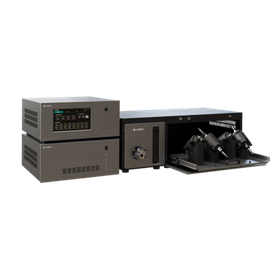
Emulsification and Dispersion System "DEBREX"

Achieves stable emulsification and dispersion with high uniformity without surfactants.

Using cylindrical piezoelectric ceramics, we focus ultrasonic energy at the center to generate powerful energy, achieving uniform emulsification, dispersion, and extraction. Features of the DEBREX device: 1. Operates without pretreatment in an inline process. 2. Implements measures to prevent sample degradation and control heat generated by the device, allowing for continuous operation for over 30 days. 3. Prevents sample contamination with individual injection pipes. 4. Ensures sample diversity with frequency and power control functions. 5. Controls the operation of all functions within the display. 6. Ensures reproducibility with real-time monitoring of operating status. Manufacturer: Fust lab (South Korea)

  • Emulsifier/Disperser
  • Dispersion/emulsification equipment/homogenizer
  • Distributed Systems

Added to bookmarks

Bookmarks list

Bookmark has been removed

Bookmarks list

You can't add any more bookmarks

By registering as a member, you can increase the number of bookmarks you can save and organize them with labels.

Free membership registration

Cellulose Nanofiber (CNF) Dispersion Process Design System

Easily agglomerated CNF, uniformly without clumping. The quality of dispersion is determined by process design.

Cellulose nanofiber (CNF) is being utilized in a wide range of fields such as automotive, food, and cosmetics as a next-generation material with high strength and lightweight properties. However, CNF has strong cohesiveness and high viscosity, which can lead to challenges such as "clumping," "poor dispersion," and "mixing issues due to increased viscosity," making stable dispersion difficult. In particular, poor wetting during powder addition and incompatibility in shear conditions and fluid design can easily lead to variations in dispersion quality and reduced reproducibility, often resulting in cases where consistent quality cannot be reproduced during scale-up. Shibuya Kogyo's solid-liquid mixing and dispersion system optimizes the entire process, including powder supply, addition conditions, dispersion processes, and fluid design, according to the characteristics of CNF. This is not just about selecting equipment; it achieves stabilization of dispersion quality and improvement of reproducibility from a process design perspective. Furthermore, by designing the entire process consistently from dispersion to formulation and CIP cleaning, it also contributes to reducing losses between processes and lowering equipment load. With consistent support from research and development to mass production startup, we assist in solving the challenges of the CNF dispersion process. You can view the concepts of process design and case studies on our official website. Please feel free to contact us first.

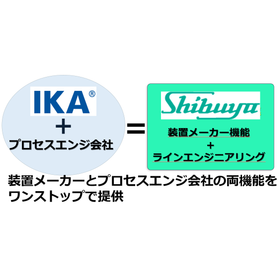
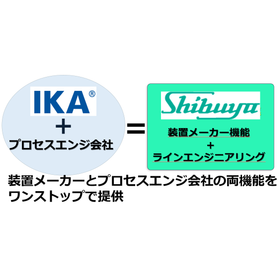
  • IKA+shibuya .png
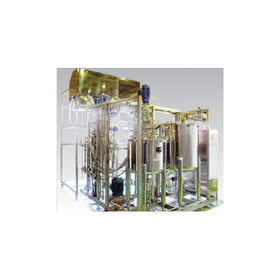
  • インライン固液混合パイロットプラント.jpg
  • IPROS29562848587318290804.png
  • Emulsifier/Disperser
  • Dispersion/emulsification equipment/homogenizer
  • Emulsifying and dispersing machine
  • Distributed Systems

Added to bookmarks

Bookmarks list

Bookmark has been removed

Bookmarks list

You can't add any more bookmarks

By registering as a member, you can increase the number of bookmarks you can save and organize them with labels.

Free membership registration

Inline solid-liquid mixing and dispersion system for adhesives [Case study materials available]

Thanks to our unique dispersion system, we can achieve the mixing and dispersion of fine powders in a short time without generating lumps! We can accommodate both continuous and batch processes.

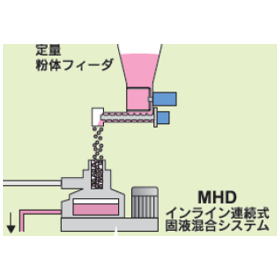
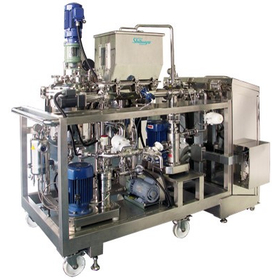
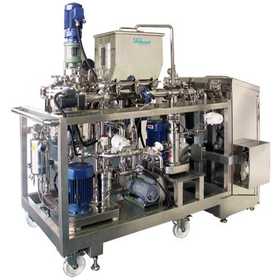
This is an inline solid-liquid mixing and dispersion system for adhesives. It is a groundbreaking system that performs the mixing and dispersion of various fine powders and liquids inline. With our exceptional engineering technology cultivated through our plant business, we can individually respond to a variety of needs. 【Features】 1. Our unique dispersion system achieves the mixing and dispersion of fine powders in a short time without generating clumps. 2. Depending on the combination of equipment, it can accommodate both continuous and batch processes. 3. We provide total engineering tailored to user needs. *We are currently offering materials that introduce examples of equipment combinations such as slurry-type and batch-type.

  • IKA+shibuya .png
  • インライン固液混合パイロットプラント.jpg
  • Emulsifier/Disperser
  • Vacuum degassing machine
  • Dispersion/emulsification equipment/homogenizer
  • Distributed Systems

Added to bookmarks

Bookmarks list

Bookmark has been removed

Bookmarks list

You can't add any more bookmarks

By registering as a member, you can increase the number of bookmarks you can save and organize them with labels.

Free membership registration

CNT conductive material paste dispersion system

CNT dispersion is determined by the process. Control of aggregation stabilizes conductivity.

In conductive paste using CNT (carbon nanotubes), the strength of aggregation and the difficulty of dispersion are challenges. If not sufficiently dispersed, a conductive network will not form, leading to unstable performance; on the other hand, excessive shear can lead to the destruction of the CNT structure, making the optimization of dispersion conditions essential. Furthermore, even slight differences in the dispersion state can significantly affect viscosity and conductivity, becoming a factor in quality variation during mass production. This system appropriately breaks down CNT aggregation while maintaining structure through process design that includes powder input, wetting processes, dispersion energy control, and circulation conditions. It is designed with the same logic from the lab to mass production, achieving a balance between conductivity and reproducibility.

  • カタログ表紙.png
  • IKA+shibuya .png
  • インライン固液混合パイロットプラント.jpg
  • IPROS29562848587318290804.png
  • Emulsifier/Disperser
  • Vacuum degassing machine
  • Dispersion/emulsification equipment/homogenizer
  • Distributed Systems

Added to bookmarks

Bookmarks list

Bookmark has been removed

Bookmarks list

You can't add any more bookmarks

By registering as a member, you can increase the number of bookmarks you can save and organize them with labels.

Free membership registration

Positive electrode slurry solid-liquid mixing dispersion system

The quality of the positive electrode slurry is determined by the process, not the equipment. A dispersed design that takes mass production into account.

In the positive electrode slurry of lithium-ion batteries, the ability to uniformly disperse active materials, conductive agents, and binders affects the coating properties, electrode quality, and stability of battery performance. In actual production environments, issues such as clumping during powder addition, aggregation of conductive materials, poor mixing due to increased viscosity, and variations in dispersion between batches often arise. Even if there are no problems during the research phase, it is not uncommon for these issues to hinder reproducibility in mass production. This system designs the entire process of positive electrode slurry, including powder supply, input conditions, dispersion energy, circulation conditions, and formulation processes, to suppress dispersion inconsistencies and undispersed materials. By focusing on process design rather than just the equipment itself, it supports consistent scale-up and reproducibility from laboratory validation to mass production lines. It is also possible to consider conditions tailored to the positive electrode materials and formulation conditions.

  • カタログ表紙.png
  • IKA+shibuya .png
  • インライン固液混合パイロットプラント.jpg
  • IPROS29562848587318290804.png
  • Emulsifier/Disperser
  • Vacuum degassing machine
  • Dispersion/emulsification equipment/homogenizer
  • Distributed Systems

Added to bookmarks

Bookmarks list

Bookmark has been removed

Bookmarks list

You can't add any more bookmarks

By registering as a member, you can increase the number of bookmarks you can save and organize them with labels.

Free membership registration

Inline solid-liquid mixing and dispersion system for resin materials [Case study materials available].

Thanks to our unique dispersion system, the mixing and dispersion of fine powders can be achieved in a short time without the formation of lumps! We can accommodate both continuous and batch processes.

This is an inline solid-liquid mixing and dispersion system for resin materials. It is a groundbreaking system that performs the mixing and dispersion of various fine powders and liquids inline. With our exceptional engineering technology cultivated through our plant business, we cater to a wide range of individual needs. 【Features】 1. Our unique dispersion system achieves the mixing and dispersion of fine powders in a short time without generating clumps. 2. Depending on the combination of equipment, we can accommodate both continuous and batch processes. 3. We provide total engineering tailored to user needs. *We are currently offering materials that introduce examples of equipment combinations such as slurry and batch systems.

  • Other processing machines
  • Distributed Systems

Added to bookmarks

Bookmarks list

Bookmark has been removed

Bookmarks list

You can't add any more bookmarks

By registering as a member, you can increase the number of bookmarks you can save and organize them with labels.

Free membership registration

Inline solid-liquid mixing and dispersion system for ink (coating) [Materials available]

Thanks to our unique dispersion system, mixing and dispersing fine powders can be achieved in a short time without causing clumping! We can accommodate both continuous and batch processes.

This is an inline solid-liquid mixing and dispersion system for inks (paints). It is a groundbreaking system that performs the mixing and dispersion of various fine powders and liquids inline. With the exceptional engineering technology cultivated in our plant business, we provide tailored solutions to meet diverse needs. 【Features】 1. Our unique dispersion system achieves the mixing and dispersion of fine powders in a short time without generating clumps. 2. Depending on the combination of equipment, it can accommodate both continuous and batch processes. 3. We offer total engineering solutions tailored to user needs. *We are currently providing materials that introduce examples of equipment combinations such as slurry-type and batch-type.

  • IKA+shibuya .png
  • インライン固液混合パイロットプラント.jpg
  • Emulsifier/Disperser
  • Vacuum degassing machine
  • Dispersion/emulsification equipment/homogenizer
  • Distributed Systems

Added to bookmarks

Bookmarks list

Bookmark has been removed

Bookmarks list

You can't add any more bookmarks

By registering as a member, you can increase the number of bookmarks you can save and organize them with labels.

Free membership registration

A mixing system to stabilize the dispersion quality of carbon nanotubes (CNT).

Dispersion is not determined by the equipment. It is determined by the process design of the CNT dispersion system.

In CNT dispersion processes, challenges such as "agglomeration," "re-agglomeration," and "insufficient conductivity" are likely to occur, especially in high-concentration slurries where increased viscosity makes uniform dispersion difficult. Additionally, during scale-up, it is often challenging to reproduce dispersion conditions, leading to cases where performance achieved in the research phase cannot be replicated in mass production. Shibuya Kogyo's inline solid-liquid mixing and dispersion system designs a dispersion process tailored to the characteristics of CNTs throughout the entire process. It optimizes everything from powder supply to dispersion, formulation, and CIP cleaning in a consistent manner, achieving uniform and reproducible dispersion while suppressing agglomeration and clustering. Furthermore, it accommodates both continuous and batch methods, allowing for flexible process construction based on material characteristics and production conditions. The system also addresses the optimization of dispersion energy and input conditions, which are crucial for CNT dispersion, maximizing conductivity while suppressing over-dispersion and re-agglomeration. It flexibly responds to variations in material characteristics and lot fluctuations, maintaining stable quality. Not just a simple dispersion device, but a system that governs CNT dispersion throughout the entire process, providing consistent quality from research and development to mass production lines. If you are facing issues with CNT agglomeration, clustering, or conductivity, please consult us with your condition and material information.

  • Emulsifier/Disperser
  • Vacuum degassing machine
  • Dispersion/emulsification equipment/homogenizer
  • Distributed Systems

Added to bookmarks

Bookmarks list

Bookmark has been removed

Bookmarks list

You can't add any more bookmarks

By registering as a member, you can increase the number of bookmarks you can save and organize them with labels.

Free membership registration

Negative electrode slurry solid-liquid mixing and dispersion system

The negative electrode slurry's key is balancing viscosity and dispersion. Process design that can be reproduced up to mass production.

Negative electrode slurry (graphite, Si-based) tends to have high solid content and high viscosity, making it a challenging material for mixing and dispersion. Issues such as clumping during powder addition, poor binder dispersion, mixing failures due to increased viscosity, and variations in coating properties are common, especially with Si-based materials, where the dispersion state directly affects battery performance and lifespan. Additionally, there are many cases where dispersion can be achieved in the research phase but cannot be reproduced during mass production. This system is designed to optimize the entire process from powder supply to dispersion and formulation, optimizing input conditions, dispersion energy, and fluid design. It achieves uniform dispersion even under high viscosity conditions and ensures reproducibility through consistent scale-up design from the lab to mass production. We propose the optimal process tailored to material properties and formulation conditions.

  • カタログ表紙.png
  • IKA+shibuya .png
  • インライン固液混合パイロットプラント.jpg
  • IPROS29562848587318290804.png
  • Emulsifier/Disperser
  • Vacuum degassing machine
  • Dispersion/emulsification equipment/homogenizer
  • Distributed Systems

Added to bookmarks

Bookmarks list

Bookmark has been removed

Bookmarks list

You can't add any more bookmarks

By registering as a member, you can increase the number of bookmarks you can save and organize them with labels.

Free membership registration

Solid-liquid mixing dispersion system for LiB (lithium-ion battery materials)

The quality of the battery slurry is determined by the process. A dispersion design that can be reproduced from research to mass production.

In the manufacturing of lithium-ion batteries (LiB), the dispersion quality of the positive and negative electrode slurries and conductive material pastes significantly affects battery performance, lifespan, and safety. On-site challenges include clumping during powder input, agglomeration of conductive materials, poor mixing due to increased viscosity, and variability between batches. Particularly in the research phase, issues may not arise, but many cases are observed where they cannot be replicated during mass production. Many of these challenges stem not from individual equipment but from the entire process, including input conditions, dispersion energy, fluid design, and process configuration. This system is designed to provide a consistent approach from powder supply to dispersion and formulation, establishing an optimal dispersion process tailored to material properties and formulation conditions. By designing with the same logic from the lab to small machines, pilot, and mass production lines, reproducibility and quality stability during scale-up are achieved. It is also capable of accommodating process design according to the characteristics of the positive electrode, negative electrode, and conductive materials.

  • カーボン混合液.jpg
  • IKA+shibuya .png
  • インライン固液混合パイロットプラント.jpg
  • IPROS29562848587318290804.png
  • Emulsifier/Disperser
  • Vacuum degassing machine
  • Dispersion/emulsification equipment/homogenizer
  • Distributed Systems

Added to bookmarks

Bookmarks list

Bookmark has been removed

Bookmarks list

You can't add any more bookmarks

By registering as a member, you can increase the number of bookmarks you can save and organize them with labels.

Free membership registration